A new season of Fragments
It's been a little while since the last Fragments update. I took a break that may or may not have lined up with the release of a certain game, a certain world event, or maybe just the fact that I needed to pause for a bit. But now I'm back with an update on the next season of Fragments.
One of my original ideas for Fragments was to offer sets of semi-related techniques and utilities called seasons (shout-out to Season Passes in gaming). People could sign up for a single season if it spoke to them, grab multiple seasons at a discount, or just skip seasons entirely. That idea came from a couple of goals that I had in mind when I started:
- I wanted to get content into people's hands really quickly, and
- I wanted to be able to provide smaller, more accessible content that was easier to just jump into and learn from
It didn't work out that way - before I'd even started working on the platform itself, I wound up really enjoying the process of creating the technique content, so I just kept going until that was done! At that point, I didn't want to just drip-feed it out, I wanted to share it all at once! That coupled with the added complexity of managing multiple seasons and licensing was a bit too much for the first run.
Fast forward 6 months, I've had a ton of feedback from people asking for a way to access smaller chunks of content, especially if they are not ready to commit to the full Fragments collection.
Now that I've been able to take a bit of a break, and reflect on the goals for Fragments, I'm excited to announce what's coming in Season 2.
A richer techniques experience
I've been thinking hard about what helps people actually learn shaders. I keep coming back to one thing: people learn faster when they can see change happen in real time, engage with it directly, and understand why it happened.
That's the big goal for Fragments Season 2: make the learning experience feel more alive, more practical, and easier to start.
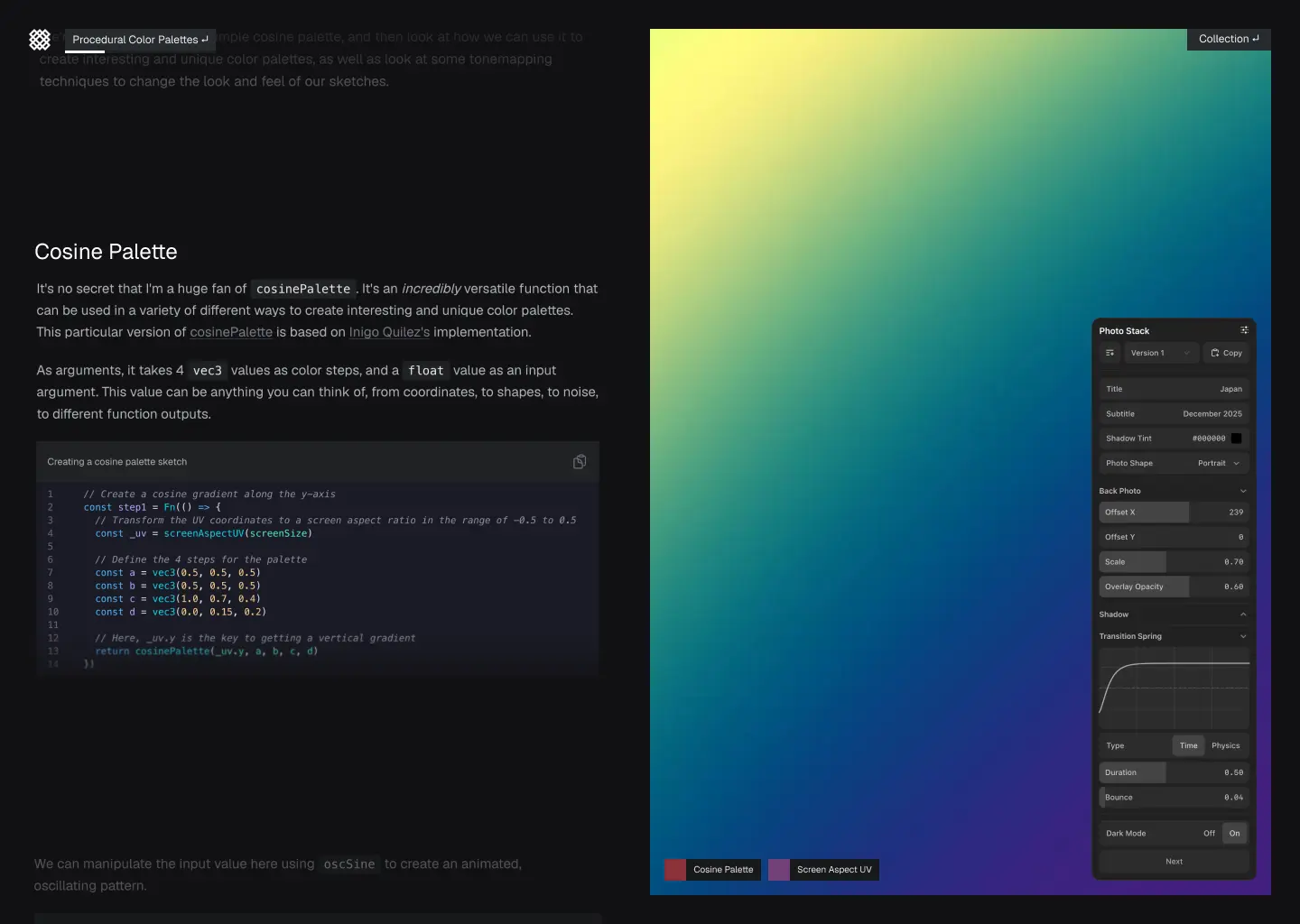
To that end: the techniques section is getting a full refresh. Instead of static explanations only with inline media and code snippets, each technique will show visible shader progress with controls you can tweak while reading.
That means:
- A more dynamic experience, with controls you can tweak while reading
- A clearer path to understanding what's going on, with over 50 new actual shader examples to play with in real time
- A cleaner, more spacious layout that focuses your eyes on the current content
Here's a mockup of what I'm aiming for the new techniques section to look like (shoutout to Dialkit):
Alongside that, there's a new approach to the interface so you can focus directly on the content:
I've already made a lot of progress on this, and people who have signed up for Fragments can already try parts of it right now.
A new technique: Cellular Automata
After doing a lot of research and playing with this technique for Genuary 2026, I kind of fell in love with it and wanted to include it in the next Fragments season.
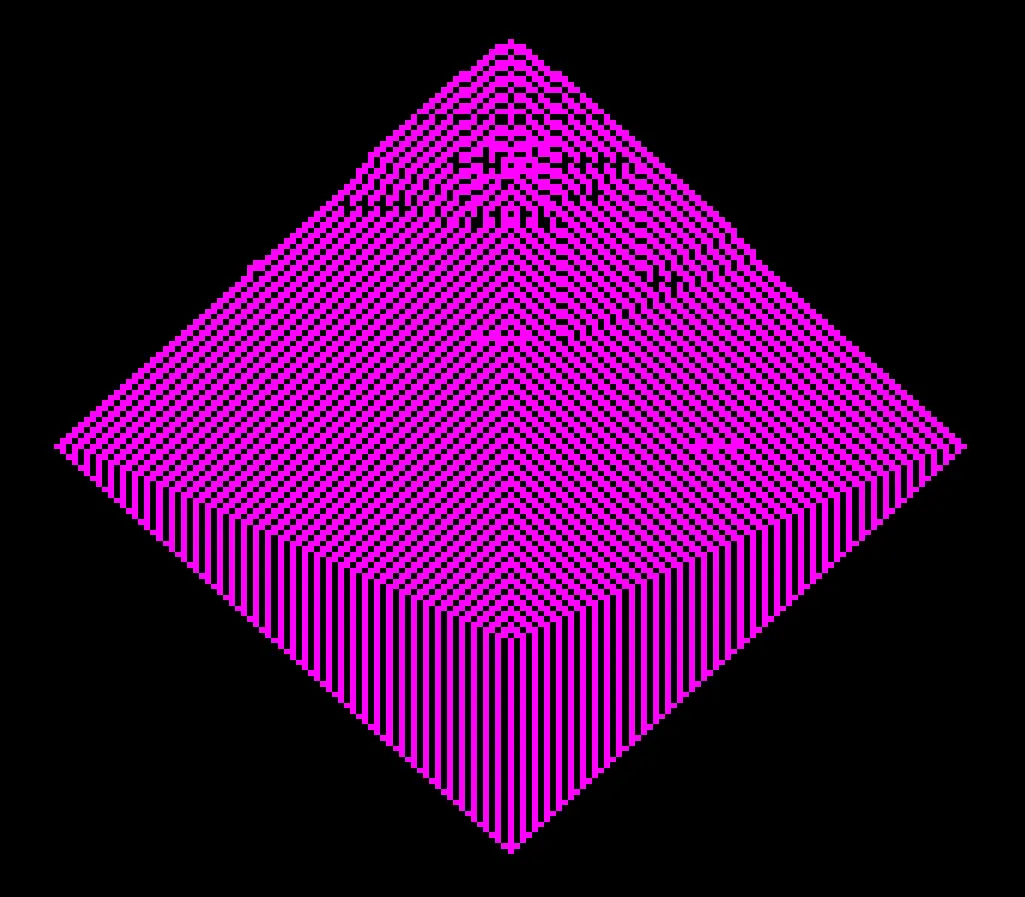
I'm fascinated with cellular automata - it's one of the best ways to build intuition for emergence, and what better way to do it than with compute shaders? Season 2 will include a dedicated technique for it, from basic rule setup to visual styling.
The goal is not just "here is Conway's Game of Life." The goal is understanding the building blocks so you can create your own variants and art direction.
You will get:
- A clean base implementation that is easy to inspect and to modify
- Rule variations you can toggle to see how behavior changes
- Visual passes that turn simulation output into polished frames
- Ideas for combining CA with noise, feedback, and post effects
Out of everything I learned in Genuary 2026, this is the one that has stuck with me the most, and the one I keep coming back to.
A focus on fundamentals
I've internalized a lot of things when it comes to writing shaders in TSL. These are some things that are becoming second nature to me, but not always obvious when you're learning. This is where I'm putting a lot of focus in the next season.
Season 2 fundamentals will focus on:
- Performance optimization basics for interactive shader scenes
- Live-tweaking controls to speed up iteration and art direction
- Debugging workflows when visuals break and you do not know why
TSL is still a new technology, so some parts are still a bit of a mystery, but it's improving and expanding really quickly. That makes some of this content challenging to write, but my plan is to keep it as up to date as possible as things evolve.
A lower cost entry point
I don't want to bury the lede: in the next season, Fragments will have two price points:
- Pro membership - Full access to current and future Fragments content (everyone who has signed up has this sort of membership already)
- Fundamentals membership - A curated selection of what I think are the fundamental parts of Fragments that will help you get started and build confidence with practical shader workflows
There will be upgrade paths for those who want to move from Fundamentals to full access, but the fundamentals membership will be a much cheaper entry point.
This is for people who want to:
- Start with core concepts before going deeper
- Build confidence with practical shader workflows
- Decide if full access is the right next step
The plan is to make onboarding feel less risky without watering down the quality of the learning path.
Target launch date: late May 2026
The current target is late May 2026 to coincide with Three.js conf. If you're attending, following remotely, or just riding that energy, Season 2 should land at the right time.
I will share previews as features lock in, including more footage of the new controls-first technique experience and early looks at the cellular automata technique.
See you soon!
Fragments Season 2 is coming in late May 2026 with richer techniques, cellular automata, a stronger focus on fundamentals, and a lower-cost way in.
I'm really excited to share this, and I can't wait to see what you create with it.